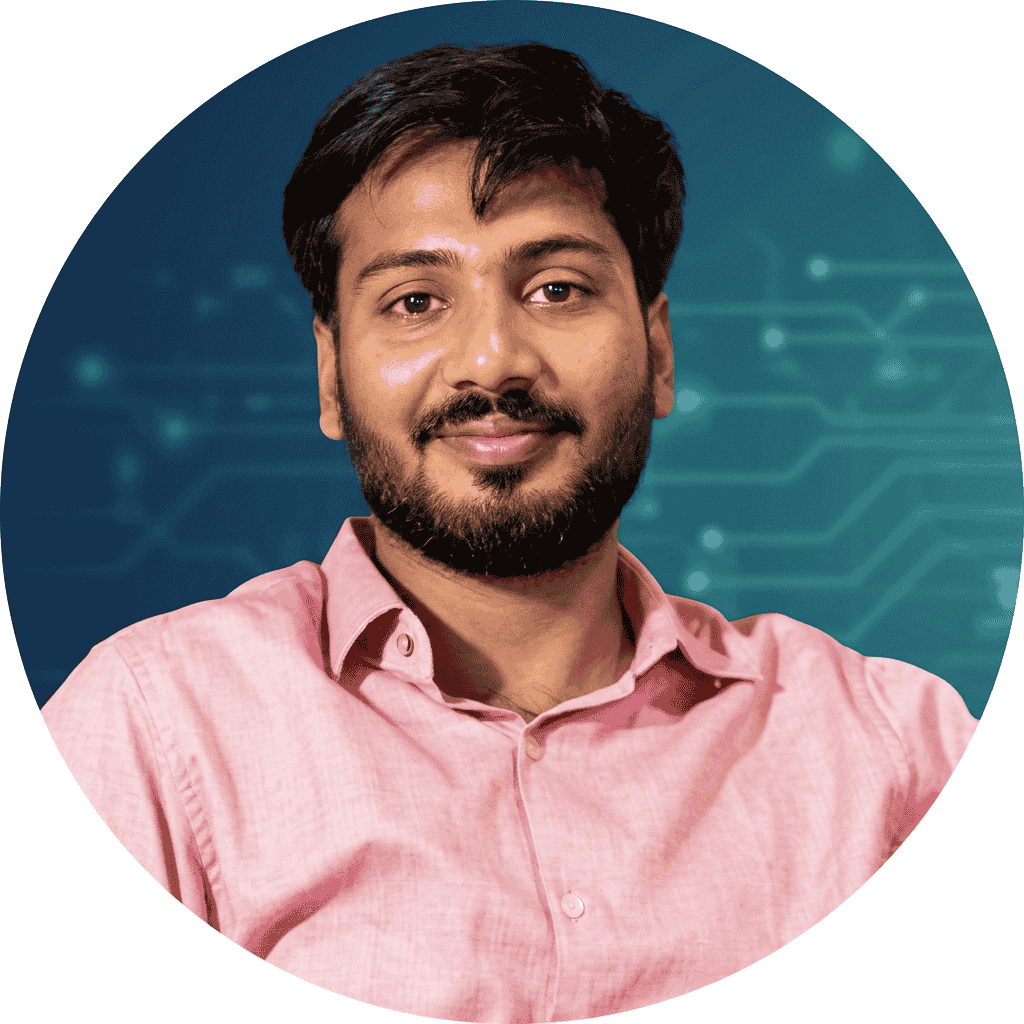
I’m Adarsh Pandey, an MCA student specializing in Artificial Intelligence & Data Science at Graphic Era University. I combine solid mathematical foundations with exploratory experimentation to build next-generation intelligent solutions.
Bridging mathematical principles with research-driven AI and empirical experimentation.
I’m Adarsh Pandey, currently pursuing an MCA in Artificial Intelligence & Data Science at Graphic Era University.
My journey into computer science began with a BCA from Microtech College of Management and Technology, where I developed fundamental programming discipline and software engineering principles. Today, my primary intellectual focus centers on Artificial Intelligence, Machine Learning, Data Science, and research-oriented problem solving.
My long-term aspiration is to become an AI Researcher / AI Research Scientist, contributing to meaningful, foundational advancements in intelligent systems and machine cognition.
I believe true AI capability extends far beyond calling pre-trained APIs. It demands a rigorous grasp of linear algebra, probability, loss landscapes, reproducible experimentation, and the foundational algorithms powering modern intelligence.
MCA — AI & Data Science
Graphic Era UniversityMachine Learning & Systems
Optimization & Empirical VerificationAI Research Scientist
Contributing to Foundational AIAuthentic technical assessment focused on deep continuous learning and practical mastery.
Academic institutions shaping my computer science foundations and artificial intelligence specialization.
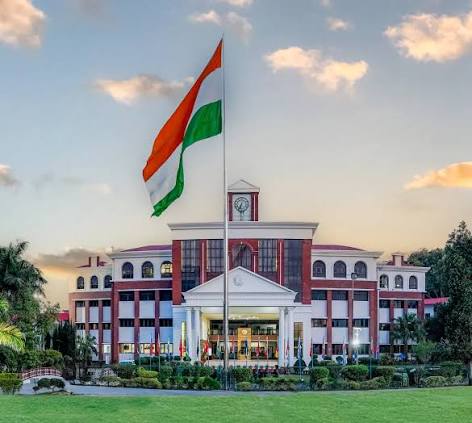
Advanced curriculum focused on Machine Learning, Deep Learning, Statistical Analysis, Neural Networks, and AI Research methodology.
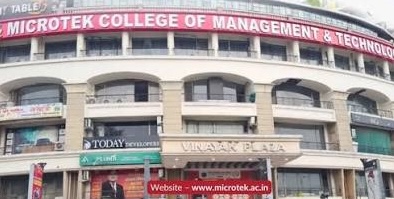
Undergraduate education covering programming paradigms, data structures, database management systems, software engineering, and core computing fundamentals.
Verified technical coursework and ongoing specialized machine learning credentials.
Core Python programming, data manipulation with NumPy/Pandas, exploratory visualization, and data analysis fundamentals.
● Verified LearningSupervised regression, classification algorithms, model evaluation metrics, and feature selection pipelines.
● Verified LearningExploratory coursework on perceptrons, backpropagation gradients, PyTorch fundamentals, and convolutional structures.
⏳ Active CourseworkRelational database design, complex SQL queries, indexing, schema normalization, and structured data handling.
● Verified LearningExploring mathematical and computational domains shaping the future of intelligent systems.
Investigating core algorithmic principles, decision systems, heuristic optimization, and intelligent agent architectures.
Studying supervised, unsupervised algorithms, loss landscapes, model regularization, and out-of-distribution generalization.
Exploring multi-layer representations, gradient propagation dynamics, PyTorch implementations, and neural capacity.
Exploring generative modeling paradigms, latent space interpolations, and sample synthesis techniques.
Analyzing Transformer attention mechanisms, sequence-to-sequence modeling, positional encodings, and token embeddings.
Investigating convolutional feature extraction, object detection pipelines, image segmentation, and spatial representations.
Studying semantic analysis, text tokenization, sentiment detection, contextual representations, and linguistic comprehension.
Deepening foundations in Linear Algebra, Vector Calculus, Multivariate Optimization, Probability Distributions, and Statistics.
Real software implementations combining web architecture, data analytics, and machine learning concepts.
A digital platform designed to help users explore the cultural, spiritual, and historical heritage of Varanasi with interactive mapping and AI chatbot guidance.
A social-impact system concept designed to minimize food waste by intelligently connecting restaurants with nearby NGOs for timely surplus food redistribution.
A data science and machine learning exploration analyzing financial time-series, performing statistical feature engineering, and evaluating regression model trends.
A modular Python application implementing core banking operations, account authorization, transaction receipts, and structured JSON data persistence.
A structured progression from core computing fundamentals to AI research scientist ambition.
Developed strong core computer science fundamentals, data structures, and object-oriented programming at Microtech College.
Enrolled at Graphic Era University specializing in Artificial Intelligence and Data Science coursework.
Deepening knowledge in Linear Algebra, Multivariate Calculus, Probability, and Statistical Inference required for AI theory.
Mastering supervised and unsupervised learning algorithms, feature engineering, and model evaluation metrics.
Understanding backpropagation, convolutional layers, recurrent architectures, PyTorch, and TensorFlow.
Exploring Transformer architectures, self-attention, prompt engineering, and generative model dynamics.
Reading seminal AI literature, reproducing experimental setups, and questioning algorithmic assumptions.
Contributing novel insights, publishing research, and designing next-generation intelligent systems.
Sequential milestone map detailing technical progression toward rigorous AI research capability.
An authentic documentation hub for ongoing experiments, paper notes, and architectural implementations.
Empirical evaluations comparing optimization algorithms (Adam, SGD, AdamW) across image classification datasets.
Detailed reading notes on "Attention Is All You Need" (Vaswani et al.) and foundational self-attention mechanics.
Building a mini deep learning automatic differentiation engine in pure Python/NumPy for learning backpropagation.
Preprocessed time-series and textual datasets prepared for machine learning feature engineering tasks.
Exploratory small-scale model fine-tuning experiments focused on domain-specific NLP queries.
Conceptual notes examining safe agent decision boundaries and verifiable constraints in autonomous planning.
Live profile integration tracking continuous coding and public repository developments.

Documenting my code, research experiments, and computer science projects transparently in open repositories on GitHub.
Core mathematical and computational areas undergoing active study and practice.
Python for AI/ML
Data Structures & Algorithms
Statistics & Inference
Probability Theory
Linear Algebra
Machine Learning
Deep Learning
Generative AI
Research Methodology
AI Research Papers
Artificial Intelligence is not merely about consuming models. It is about understanding mathematical dynamics, testing hypotheses, and discovering what comes next.